
The Ukrainian Center for Independent Political Research presented the results of the study "Working Despite the War: The Reality of CSOs in Frontline Territories", dedicated to the challenges faced daily by civil society organizations in regions close to the combat zone.
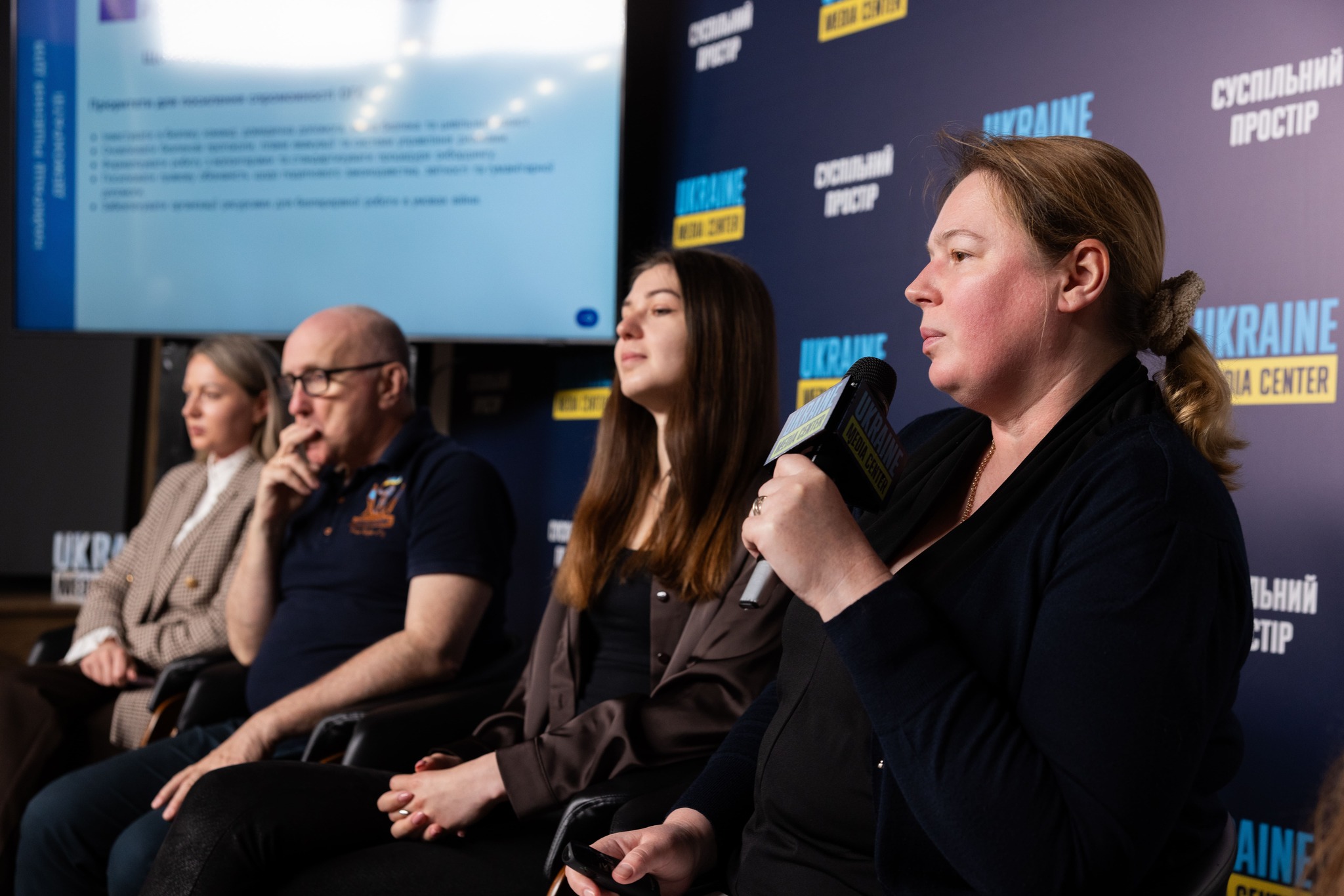
The presentation took place at Media Center Ukraine, with participation from representatives of the public sector, international organizations, and state institutions.
The study covered Kharkiv, Sumy, Chernihiv, Donetsk, Luhansk, Zaporizhzhia, Dnipropetrovsk, Mykolaiv, and Kherson regions. It is based on the results of an online survey of 36 civil society organizations and a series of focus group discussions with sector representatives.
Executive Director of UCIPR Valeriia Skvortsova emphasized that since the beginning of the full-scale invasion, NGOs have become key actors in responding to the challenges of the war.

"Despite exceptionally difficult conditions, organizations continue to evacuate people, deliver humanitarian aid, support the military, and work with communities. At the same time, the conditions under which they operate are not discussed enough. That is exactly why we decided to research these challenges and develop recommendations that could facilitate their work," noted Valeriia Skvortsova.
At the same time, Volodymyr Kuprii, Senior Monitoring and Evaluation Manager at the East Europe Foundation, highlighted the importance of an evidence-based approach to decision-making when supporting civil society.

"As a monitoring and evaluation specialist, I understand very well how important it is to rely on data rather than general impressions or feelings. Decisions made without an evidence base are much less likely to achieve real results. Such data is needed by all of us—by donors to better understand real working conditions, and by the organizations themselves to have arguments in their dialogue with partners and authorities," he added.
The study centered on organizations that, despite security risks, population evacuations, infrastructure destruction, and personnel losses, continue to operate in frontline areas. Their experience formed the core of the analysis, helping to shape key recommendations for the state, donors, and the civil society sector.
Presenting the findings, co-author of the study and UCIPR analyst Yaryna Pokhodai noted that the survey involved both national and local organizations operating directly in frontline areas or implementing projects there.

According to her, the biggest challenges for CSOs remain safety, logistics, and team retention.
The findings showed that constant shelling, the threat of drone attacks, power outages, communication disruptions, damaged infrastructure, and difficulties reaching certain settlements directly impact the organizations' ability to provide aid and execute projects.
Capacity remains an equally acute problem. Due to evacuations, staff relocation, and emotional burnout, many organizations struggle to form and maintain teams. Meanwhile, human resources are a key factor in their resilience.
Co-author of the study and UCIPR expert on CSO taxation and charitable activities Yuliia Panura pointed out that based on the findings, a set of recommendations was drafted for authorities, donors, and the civil society sector.
Key recommendations include investing in team safety, regularly updating knowledge of first aid, mine safety, and civil defense, and reviewing and updating internal safety policies and evacuation protocols.
The experts paid special attention to the need for more flexible funding and reporting approaches for frontline organizations.
According to Yuliia Panura, under constant shelling and power/communication outages, public organizations cannot always meet administrative requirements on time, so support mechanisms must reflect their day-to-day realities.
During the panel discussion, participants explored how to strengthen the capacity of public organizations in frontline regions and what decisions are needed to support local communities during the war.
Tetiana Horodenska, Representative of the Secretariat of the Ukrainian Parliament Commissioner for Human Rights, stressed the critical issues of population evacuation and the availability of protective shelters. According to her, a significant portion of evacuees from frontline areas pass through transit centers, but even the largest ones need additional shelter equipment and upgraded security infrastructure.
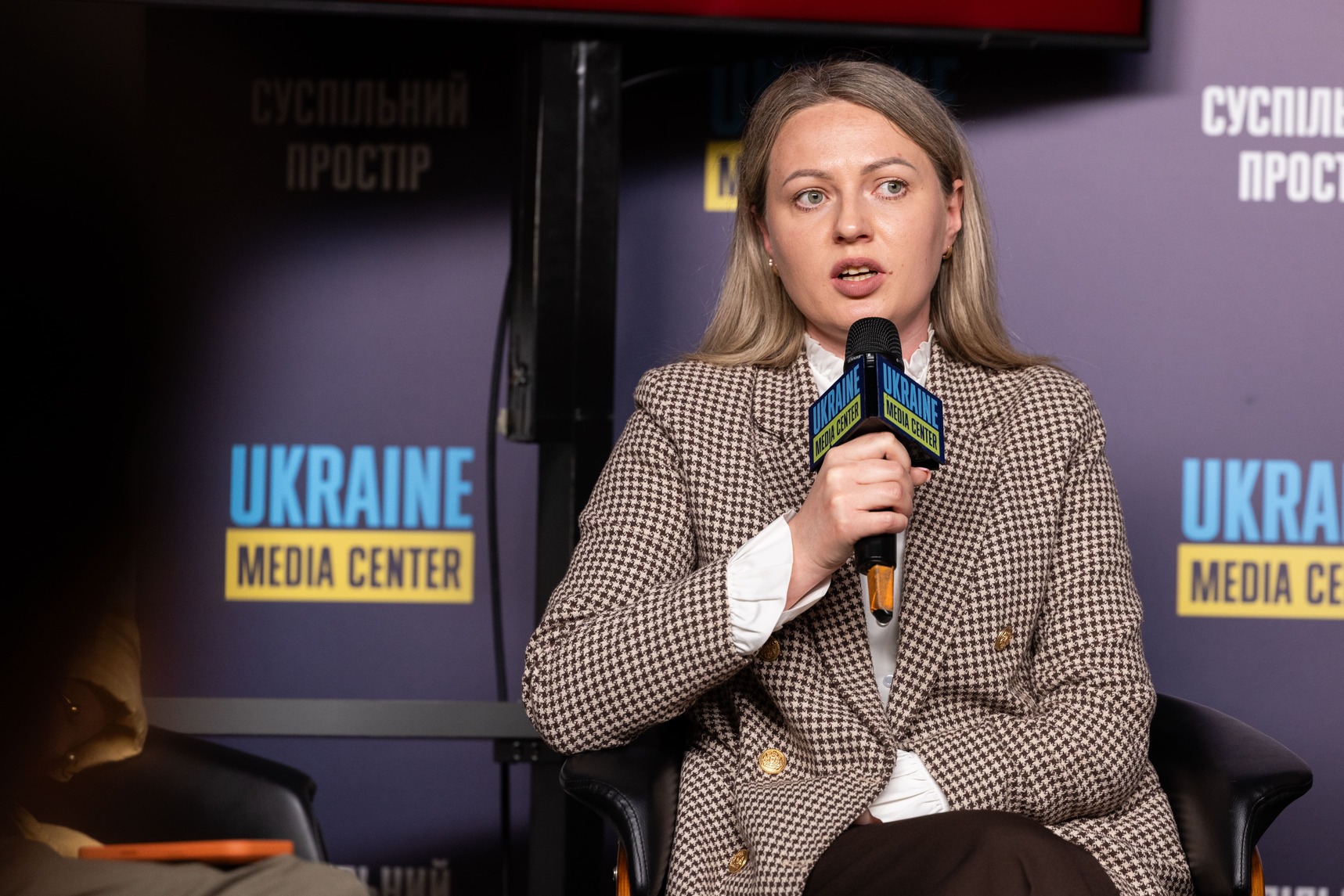
She noted that in 2025, the Commissioner's Secretariat conducted 1,066 monitoring visits to assess the condition of civil defense shelters across Ukraine. The results revealed that 97% of the shelters did not meet current requirements. Out of the 1,066 inspected sites, only about 80 required no recommendations for improvement. In total, 3,996 recommendations were issued based on the monitoring results.
Tetiana Horodenska also noted that, as of early 2026, over 60,000 civil defense facilities are registered in Ukraine, of which about 43,000 are simple shelters. Many still fail to provide proper accessibility for low-mobility groups and do not meet basic setup requirements.
Tetiana Voskoboinikova, Executive Director of the NGO "Spilno HUB," shared the public sector's experience in the Zaporizhzhia region. She emphasized that even under constant shelling, communities cannot focus exclusively on crisis response.

According to her, community development remains equally vital, as staying constantly in emergency response mode drains teams, depletes resources, and reduces the capacity to plan for the future. She also remarked that Zaporizhzhia is often perceived as a territory where life has come to a halt due to its proximity to the frontline, yet the region's communities continue to work and implement development projects.
However, she noted that not all donor programs cover the Zaporizhzhia region—especially long-term development projects—which further complicates resource hunting for local CSOs.
Similar issues were confirmed by Svitlana Danicheva, representative of the "Angels of Salvation" charitable foundation. She emphasized that one of the sharpest challenges today is providing housing for people who agree to evacuate.

According to her, people are increasingly willing to evacuate only when they have a clear understanding of where they will live after moving and what support they will receive at the new location.
Svitlana Danicheva named legal and tax issues as another major challenge. She noted that NGOs are often forced to navigate complex aspects of tax legislation and other regulatory requirements on their own without sufficient legal support.

Summing up the discussion, the participants agreed that civil society organizations in frontline territories remain a foundational element of community resilience. They are often the first to respond to humanitarian crises, help evacuate citizens, support internally displaced persons, and secure basic needs under the most difficult conditions. However, the study's results prove that systematic support is essential to preserve this vital capacity.
Read also: Legislative Changes for the Public Sector – of May 2026 Digest from the UCIPR